


This article will help operators quickly troubleshoot problems and reduce downtime so as not to affect production efficiency.
Common problems of cardboard box machines
1.Paper feeding mechanism jam
Common causes:Worn or unevenly pressed paper feed rollers; uneven cardboard; insufficient vacuum suction (automatic paper feeder); incorrectly positioned paper stop.
Solution:Adjust paper feed roller pressure;Replace worn parts;Adjust airflow/adsorption system;Correct paper stop position;
2. Inaccurate color registration in printing
Common causes:Uneven or worn printing plate; Ink viscosity is unsuitable;Anilox roller clogging; Inappropriate pressure adjustment;
Solution:Reinstall or replace the printing plate;Adjust the ink viscosity (add water or thinner); Clean the anilox roller; Adjust the printing pressure.
3. Incorrect slot
Common causes:Wear or misalignment of the cutting tool; incorrect pressure of the creasing rollers; poor cardboard quality.
Solution:Replace or adjust the cutting tools;Adjust the creasing depth and pressure;Replace with qualified cardboard.
4. Die-cut with rough edges
Common causes:Die-cutting blade dulling; rubber pad wear; uneven pressure.
Solution:Replace the die-cutting blade;Replace or adjust the rubber pads;Adjust the machine pressure.
5.The box is not properly glued.
Common causes:Uneven glue application; Adhesive quality or viscosity issues;Insufficient pressing time;
Solution:Adjust the glue application system;Replace the glue or adjust the ratio;Extend the pressing time;
6. A series of problems with nailing boxes
- Broken nail(Figure 1)
-
 Common causes:The gap between the inner and outer shears is too small, the chamfer is insufficient, or the wire feed is ahead of schedule. Solution:Increase the gap between the inner and outer shears appropriately, adjust the chamfer, adjust the wire feeding wheel, and rotate the main shaft by hand to ensure that the flat wire is fed completely under the fork cutter.
 - The nail pins are tilted to one side(Figure 2)
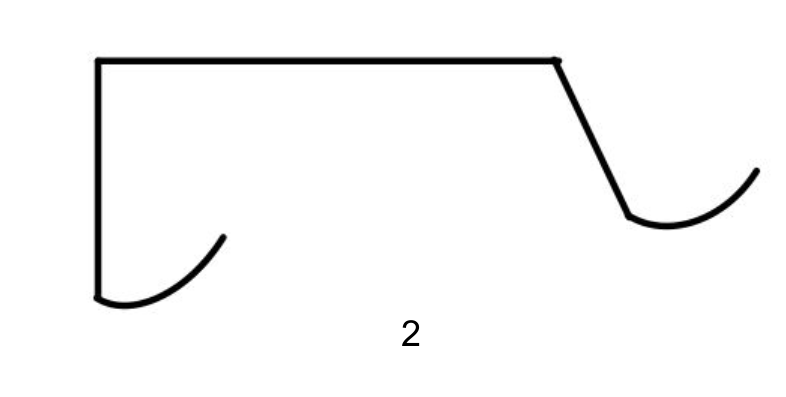 Common causes:The center of the bottom mold is not aligned with the hammer head, or the bottom mold is severely worn. Solution:Adjust the position of the bottom mold or replace the bottom mold.
 - Unequal pin length(Figure 3)
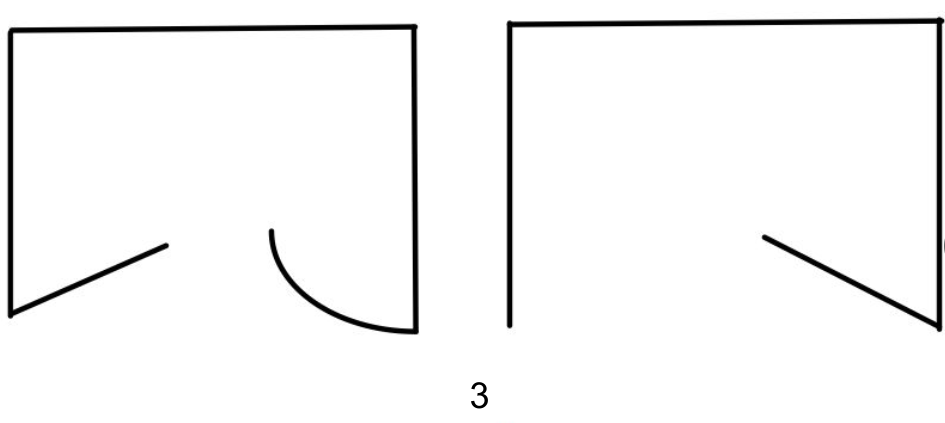 Common causes:Delayed or obstructed wire feeding; uneven width or thickness of flat wires; or damage. Solution:Adjust the pressure of the wire feeding wheel and replace the flat wire that does not meet the requirements.
 - Nail feet are crooked(Figure 4)
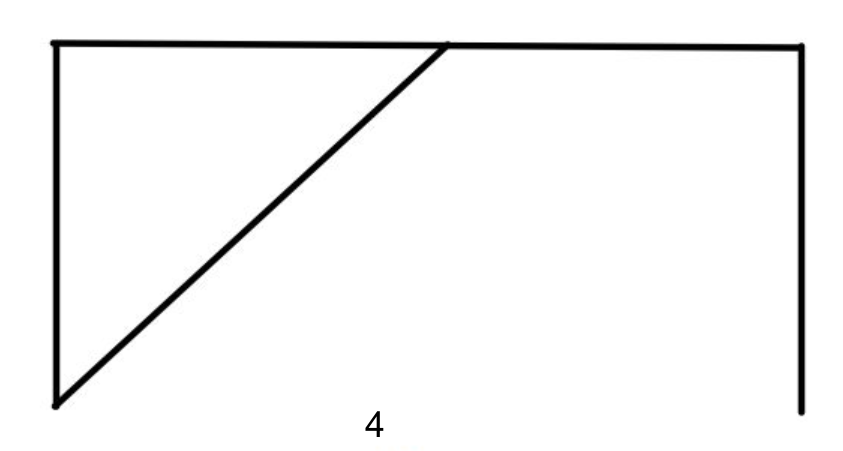 Common causes:The bottom mold’s return groove is tilted at an incorrect angle, or the bottom mold is severely worn. Solution:Adjust the return groove so that the two tips of the ejector blade are aligned, or replace the bottom mold.
7. The machine makes unusual noises or stops moving.
Common causes:Bearing wear;Gear clearance abnormalities;Loose components;
Solution:Replace bearings;Adjust gear clearance;Tighten all connecting parts;
8. Electrical appliances experience emergency stop and alarm.
Common causes:Sensor malfunction;PLC program error;Unstable power supply
Solution: Inspect and replace the sensor;Restart or update the control program;Stable power supply system.
Routine maintenance and preventive measures
Daily maintenance: Clean paper scraps, lubricate the guide rails, and check the air circuit seal.
Quarterly maintenance: Replace worn belts/bearings; calibrate all sensor positions.
Consumables Note: The die-cutting blade has a lifespan of approximately 500,000 cycles (depending on the cardboard material) and needs to be rotated or replaced periodically.
Personnel training: Improve operational skills and enhance fault diagnosis capabilities
Summary
If you are looking for stable, low-failure-rate cardboard box equipment with reliable after-sales service, please feel free to contact us. We will provide you with:One-on-one selection advice;Free technical consultation;Complete solution support.
FAQ
How to make a box out of cardboard template?
First, it was determined that there are two types of machines for making cardboard boxes using templates: one is a rotary die-cutting machine, and the other is a flatbed die-cutting machine. Regardless of the type of machine used, a die-cutting plate is used to cut cardboard to make cardboard boxes. First, determine the dimensions of the cardboard box, then draw the pattern, and finally make the die-cutting board according to the dimensions. The die-cutting plate produced can then be used to make cardboard boxes.
How to calculate carton box size?
Cardboard box dimensions are divided into inner diameter, outer diameter, and manufacturing dimensions.
Inner dimensions: the actual space inside the cardboard box that can hold items.
Outer dimensions: These are the overall external dimensions of the finished cardboard box, derived from the manufacturing dimensions plus the cardboard thickness.
Manufacturing dimensions: These are the cutting dimensions used during the production of cardboard boxes.
Carton box vs cardboard box
Core Definition Difference:
- Cardboard box: A general term for all boxes made of rigid paper-based materials. It includes almost all paper packaging boxes, such as thin single-layer cardboard boxes (like cereal boxes) and thick multi-layer corrugated boxes.
- Carton box: Usually refers to boxes made of corrugated cardboard, which is a multi-layer structure (inner paper + corrugated layer + outer paper).
Material & Structural Difference:
- Cardboard box materials: Can be single-layer paperboard (thickness usually 0.2-1mm), such as ivory board, white cardboard, used for packaging light items like food, cosmetics, and stationery. Can also be thick paperboard, but it’s still a single-layer structure without a corrugated middle layer.
- Carton box materials: Must be corrugated cardboard, which has a three-layer or five-layer structure. The wavy corrugated layer in the middle provides strong buffering and compressive capacity. Common types include A-type, B-type, C-type, and E-type corrugated, with different hardness and buffering properties suitable for different scenarios.
Usage Scenario Difference:
Cardboard box scenarios: Suitable for light, small items that don’t require high compressive capacity, such as gift boxes, food packaging boxes, shoe boxes, and product outer packaging boxes. Often used for retail display and inner packaging of products, focusing more on appearance printing and texture.
Carton box scenarios: Mainly used for transportation and logistics packaging, such as express delivery boxes, large appliance packaging boxes, and industrial product packaging. It can withstand heavy weight, stacking pressure, and long-distance transportation shocks, and is often marked with transportation signs like “fragile” and “stacking limit”.